Beginning in December 2002, Insider was proudly the first website to provide readers the Cozumel News in English.
Articles are slected from local newspapers which we feel will be of interest to our diverse audience. These articles are then translated into English. We cannot always investigate the veracity of a particular article but offer these translations as a reflection of the Cozumel community news just as reporters write it for Por Esto, Diario de Quintana Roo, Novedades and El Seminario and many other sources.
We appreciate hearing from our readers and welcome your questions, suggestions and comments. Please send them to: questions@cozumelinsider.com
Note: All translated articles are the property of Cozumel Insider and cannot be used, displayed or reproduced without express written permission from Cozumel Insider.
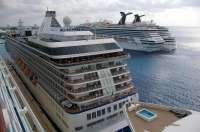
06/08/2026 - Numbers remain the same this week in Cozumel as cruise ship arrivals show 19 ships registered to dock as we head towards the Summer season. This is the same amount ships last week and 1 less than the "20 in port" which marks a "high season" number. There were 16 ships in port during the same week of 2025. An estimated 66,500 people will visit Cozumel this week via these cruise ships leaving an estimated US $ 7.1 million dollars behind in the local economy.
High season for cruise ship arrivals typically runs from November 15 - April 15 each year with the remaining 7 months of the year considered "low season." This week Puerta Maya pier will be host to 6 ships docking there, 5 ships will dock at SSA International pier while Punta Langosta pier will see 8 arrivals and the downtown San Miguel pier will have -0- arrivals with passengers tendering in.
On Monday 3 ships will dock, 4 ships will dock on Tuesday, 2 ships on Wednesday, 3 ships on Thursday, 4 ships on Friday, 3 ships on Saturday and Sunday will see 0 ships in port. To see a complete list of this week's ship arrivals, please visit Insider's Weekly Cruise Ship Schedule
Wild Tours Begins Construction On Roots Beach Club In Cozumel Without Environmental Approval
Despite lacking federal environmental authorization, ecotourism operator WT Group International Wild Tours has begun site preparation on Cozumel’s southern coast for a major beach club development called Roots Beach Club. The project is currently under review by the General Directorate of Environmental Impact and Risk (Dgira), a division of the Ministry of Environment and Natural Resources (Semarnat). The company submitted its Environmental Impact Statement (MIA) on March 17, 2026, under file number 23QR2026T0015, but began clearing land before receiving a decision.
The development covers 3.01 hectares in the southern hotel zone, with plans to clear 1.77 hectares of medium semi-evergreen forest. The complex will include offices, pools, commercial areas, a bar, kids’ club, zipline, water attractions, cabins, and a motor lobby. WT Group International Wild Tours, known locally for tram tours, cenote visits, and off-road excursions, is moving into large-scale beachfront infrastructure. The company estimates a six-year construction period and aims to secure a 90-year operating concession. Local environmental groups have raised concerns about the immediate impact on the coastal ecosystem, even as the company’s technical proposal claims it will preserve the area’s scenic beauty using regional materials such as palm thatch and stone flooring. Semarnat has not yet approved or rejected the environmental permit. Meanwhile, machinery and personnel are already working on the southwestern side of the island, bypassing the timelines set by current environmental law.
Cozumel: The Caribbean Island That Became A Sports Destination
Surrounded by the second-largest coral reef system on the planet, Cozumel has established itself as one of Latin America’s most important sports destinations.
Located just 45 minutes by ferry from Playa del Carmen, the island combines natural beauty with a packed international sports calendar that attracts runners, cyclists, swimmers, and triathletes from around the world. Cozumel sits at the heart of the Mesoamerican Barrier Reef, the second-largest coral reef system in the world. Its crystal-clear waters offer some of the best diving and snorkeling in the Caribbean, with coral gardens, spectacular underwater formations, and abundant marine life. On land, Cozumel’s flat roads, light traffic, and miles of coastline with constant sea views make it perfect for road cycling. One popular route connects downtown San Miguel with the island’s wilder eastern shore. Runners can use the San Miguel boardwalk, which offers ocean views and spectacular sunrises and sunsets.
Cozumel hosts several international events each year: IRONMAN Cozumel (November 22): One of Latin America’s most important triathlons, featuring swimming, cycling, and a marathon through iconic island locations, including the Cozumel Reefs National Park.
GFNY Cozumel (November 8): A major Caribbean cycling event with a 154-kilometer Gran Fondo route and a 77-kilometer Medio Fondo option.
Oceanman Cozumel (July): An open-water swimming competition that draws participants from around the world.
Triatlón Cozumel: Held at Chankanaab Park, this triathlon welcomes all ages and levels, from children’s categories to Olympic-distance races.
Visitors can also enjoy paddleboarding, kayaking, kitesurfing, recreational cycling, and hiking. After a day of activity, the island offers seafood restaurants, dive shops, and a relaxed boardwalk atmosphere.
After Perfect Day Project Halted, Environmentalists Warn Of New Threat From Royal Beach Club
After the federal government halted the Perfect Day water park project, environmental groups on the island are calling on the community to stay alert, as the Secretariat of Environment and Natural Resources (Semarnat) has not yet responded to Royal Caribbean’s application to develop the Royal Beach Club park.
Environmental activist Guadalupe Martín Cab said the hectares owned by the cruise line in Cozumel are covered in mangroves and serve as a nesting site for sea turtles, because that stretch of coast receives little sargassum seaweed. She explained that three species of mangrove are present, along with a wide shoreline, and that one of the world’s largest and most important reef systems lies just offshore. Specialists have described that reef barrier as the healthiest in Quintana Roo, Martín Cab noted, though it is not in optimal condition ,coral bleaching has already killed 40 percent of the colony.
Calling on residents to sign a Change.org petition to stop the project, the environmental expert said the cruise line’s executives have no regard for environmental issues. She pointed out that Royal Caribbean already owns a third pier and had sought to build a fourth, for which former municipal president Pedro Joaquín Delbouis granted local authorization, but federal permits were never obtained. Martín Cab said the cruise line has promoted the idea that it will no longer pursue the project it submitted to the General Directorate of Environmental Impact and Risk (DGIRA), alongside the Perfect Day proposal. However, Semarnat has issued no ruling on that matter, it only denied the project planned for Mahahual. She lamented that successive municipal presidents in Cozumel have privatized the beaches, leaving residents with only a strip of sand about 17 kilometers from the city center, which is owned by the cruise developers.
Cozumel residents must pay private parties to access a beach, she added, even though the law prohibits both that and the privatization of coastlines.
Mexican Navy Rescues Four Fishermen After 11 Days Adrift Near Cozumel
The Mexican Navy rescued four fishermen who spent 11 days adrift after their fishing vessel, the Jupiter, suffered a propulsion system failure and lost communication.
The Navy’s Fifth Naval Region received a report about the missing crew and immediately deployed the ocean patrol vessel ARM-Bicentenario de la Independencia (PO-163), along with Marine infantry and naval medical personnel. The fishermen were located approximately 137 nautical miles (about 253 kilometers) southeast of Isla Cozumel. They were provided with medical care and food, and officials said they are in stable condition and out of danger. They were transported to a safe port on the island.
Need a LEGAL U.S. Notary Service? THIS is your solution!
It has happened to ALL of us U.S. Citizens who spend significant amounts of time living / working in Cozumel: reading the dreaded words on a document from back home: "Notarized Signature Required." It's such a simple thing and no one wants the added expense of travelling back to the U.S. just to have their signature notarized but there are many legal processes in the U.S.A. where nothing BUT a notarized signature will be accepted.
Some common documents that U.S. Citizens need notarized while living abroad are: Real Estate Deeds or Mortgages, executing Wills, Powers of Attorney, requests for Birth / Marriage / Death Certificates, Permission for a parent to get a minor’s US Passport, banking / insurance / bonding documents, permission for a minor to travel without parents or application for duplicate or replacement vehicle titles just to name a few.
In the past, the most common solution was for a U.S. Citizen to make their way to the nearest U.S. Consulate or Embassy where notaries are always available but the fees involved can be quite expensive. In addition there is the cost of actually travelling to the Consulate and who knows if appointments will even be available especially if the notarized signature is needed urgently. Plus from Cozumel that Consulate visit includes the cost of a ferry round trip to get to Playa del Carmen. All of these complicating factors just create more of a headache for something that is supposed to be relatively easy and inexpensive.
Another option frequently used has been that of a U.S. Notary operating outside of their country and jurisdiction. While this option is usually easy and cheap (often free or for a donation), it is one of those situations where "you get what you pay for" because technically these U.S. Notaries are operating ILLEGALLY as they are outside the legal jurisdiction for which they are authorized to notarize documents. In theory an illegal notarization could be attacked and challenged in the future and nullified causing legal issues with the documents signed. A fraud challenge to a Notary operating outside of the USA, simply involves a court asking the Notary to present their passport to the judge. Immigration stamps inside the passport will prove the Notary's whereabouts when documents were signed and if this was done inside the Notary's legal jurisdiction or illegally outside their authorized jurisdiction.
So do yourself a favor and avoid any future Signature Notary problems by utilizing an ON-LINE NOTARY SERVICE. Thanks to remote online notarization (RON), you can notarize a document from anywhere in the world, using your computer or mobile device and the internet. It takes only 10 minutes and is quite an easy process right from the comfort of your own home or office any hour of the day or night.
All you need to do is click this link 24/7 Online Notary Service To use this service, the fee is $25 USD and you must have a device with audio- visual capabilities (like a smart phone, tablet or PC) and proof of identity (a valid US Government-issued photo ID such as a Driver’s License or Passport). You can then access and meet with a licensed Notary Public who will notarize your papers in a matter of minutes. The process is easy, quick, efficient and AVAILABLE 24/7 online!! So WHY take a chance doing it any other way?!
If You Are Reading This .....
Then FOR SURE you will want to sign up for our Cozumel Travel Talk Bulletin!
With monthly or bi-monthly publication to a voluntary "opt in" mailing list already exceeding 10,000 subscribing Cozumel travelers, we never share your information and promise not to flood your mailbox! Just great stories and good information for Cozumel travelers who want to get the most out of their vacation time on the island! So scroll up to the menu bar at the top of this page and enter your email address to SUBSCRIBE and start receiving our Cozumel Travel Talk Bulletin!
September 6, 2024 (Most Recent) Comprehensive Mexico Travel Warning
U.S. State Department Travel Advisory for Mexico Issued SEPTEMBER 6, 2024 shows the Mexican State of Quintana Roo (includes Cozumel, Cancun, Playa del Carmen, Riviera Maya, and Tulum) to be a LEVEL 2 Advisory - Exercise Increased Caution (Level 4 Advisory is Highest Risk):
There are "NO RESTRICTIONS" on U.S. government employees for travel to "ANY PARTS" of Quintana Roo state, which includes tourist areas such as: Cozumel, Cancún, Playa del Carmen, Riviera Maya and Tulum. However, U.S. government employees are advised to exercise increased situational awareness and caution after dark in the areas of Cancun, Tulum, and Playa del Carmen, and to remain in well-lit pedestrian streets and tourist zones.
U.S. citizens should as always exercise increased caution and be aware that according to Government of Mexico statistics, criminal activities and violence, including homicide, remain a concern throughout the State. While most of these homicides appeared to be targeted, criminal organization assassinations and turf battles between criminal groups that have resulted in violent crime in areas frequented by U.S. citizens. Bystanders injuries, while rare, have occurred. While not directed at tourists, shootings between rival gangs have killed or injured innocent bystanders. Additionally, U.S. citizens have been the victims of both non-violent and violent crimes in tourist and non-tourist areas.
The Mexico Travel Warning dated September 6, 2024 from the Department of State can also be viewed in its entirety on the Department of State website.
Copyright 2000 - 2026 Sherri Davis, All Rights Reserved. Contributors retain the copyright to their work. Please do not take art or written content without permission. Other graphics and reference materials are used and attributed as per the Fair Use Provision of The Copyright Act and individual terms of use.


 06/08/2026 - Numbers remain the same this week in Cozumel as cruise ship arrivals show 19 ships registered to dock as we head towards the Summer season. This is the same amount ships last week and 1 less than the "20 in port" which marks a "high season" number. There were 16 ships in port during the same week of 2025. An estimated 66,500 people will visit Cozumel this week via these cruise ships leaving an estimated US $ 7.1 million dollars behind in the local economy.
